Outdoor Chair Seat Height and Armrests: How to Compare
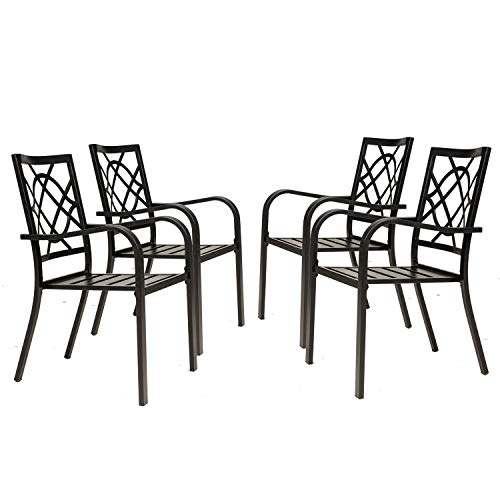
Seat height and armrests are easy to notice in a photograph and easy to misunderstand in use. A marketplace title may call a chair tall, deep, oversized, or easy rise without publishing the dimensions that determine fit. The useful comparison happens at the occupied seat: where the feet land, how far the body sits from the front edge, whether the arms are reachable, and whether the frame stays predictable.
Quick Answer
Compare at least five measurements for the exact chair: finished seat height, occupied cushion height, seat depth, distance between arms, and arm height above the seat. Use a familiar chair as a reference. Higher is not automatically better, broad arms are not automatically supportive, and no measurement guarantees suitability for a particular person.
This guide focuses on the chair itself. For circulation and surfaces, use the clear patio pathways guide. For the complete decision, including stationary versus moving bases, see patio furniture that may be easier to rise from and the accessible and aging-friendly patio furniture hub.
Build a reference from a chair that already works
Instead of beginning with a universal target, begin with observed fit. On a stable indoor chair the intended user considers workable, measure floor to the occupied top of the seat, front edge to the point where the back supports the user, clear width between arms, and seat to top of the usable arm. Record whether both feet rest securely, whether the knees are comfortable, and whether the hands contact the arms without reaching behind the torso.
These measurements become comparison data, not a medical prescription. A different surface, shoe, cushion, back angle, or fatigue level can change the experience. If a transfer is medically consequential, seek guidance from a qualified clinician or rehabilitation professional rather than relying on an online chart.
Measure seat height in the finished configuration
Retail listings may measure to the bare frame, the uncompressed cushion, or an unspecified point. Ask which one is shown. A loose cushion can compress, slide, or be removed in wet weather, changing both height and stability. A sling seat may sag below its front rail. A sculpted Adirondack seat can be higher at the front than at the rear. Record these differences instead of reducing the chair to one number.
Check foot contact at the same time. A taller seat may reduce knee flexion for one user yet leave another user’s feet unsupported. Adding loose pads or blocks is not a safe substitute for matching the chair; any accessory should be documented as compatible and remain secure during sitting and rising.
Seat depth controls how close the feet can come
Deep lounge chairs encourage reclining. That may be comfortable once seated, but the user may need to move forward before the feet are positioned for standing. Thick back cushions can shorten usable depth, while thin cushions can expose a rigid frame edge. Compare the distance from the front edge to the back support the user actually contacts.
A table or ottoman can interfere with that forward movement. Test the full furniture arrangement, not the chair in isolation. The Patio Chairs collection includes dining, lounge, swivel, rocker, and folding formats; treat each as a different mechanical category.
What makes an armrest usable?
- Reach: the hand should reach a stable portion without excessive backward movement.
- Continuity: cup holders, decorative gaps, sloped rails, and open wicker can reduce the area available to the palm.
- Rigidity: an arm that visibly flexes, loosens, or is decorative should not be assumed to support force.
- Clearance: wide arms may block a close table approach or narrow the usable seat.
- Temperature and grip: sun-heated metal, wet surfaces, rough edges, and bulky covers can change usability.
Never exceed or reinterpret the manufacturer’s instructions. A product photo cannot establish whether an armrest is designed to bear transfer force. If documentation does not address the intended use, contact the manufacturer.
Stationary, stacking, folding, swivel, and rocking bases
Base type can outweigh a promising seat measurement. A stationary four-leg chair on a flat surface has different behavior from a swivel chair, glider, rocker, folding chair, or stackable frame. Stackable chairs may use angled legs or a nested shape. Folding chairs require all locks to be fully engaged. Swivels can rotate as a user changes direction. Rockers require a complete motion clearance and a separate entry/exit evaluation.
Do not immobilize a moving chair with an improvised wedge or drill the frame. Choose the intended base behavior and follow the exact manual. For post-assembly checks, see the outdoor furniture post-assembly checklist.
Six catalog examples to measure critically
These current catalog records illustrate different formats; they are not tested recommendations or accessibility certifications. Verify the exact variation, manual, dimensions, current recall status, and seller documentation before purchase.
As an Amazon Associate, we may earn from qualifying purchases.
Stackable dining chair
Compare seat height, arm-to-table clearance, leg footprint, and how stacking geometry affects the base. Confirm the exact set and finish.
View Incbruce Stackable Patio Dining Chairs on Amazon →
Cushioned wood lounge chair
Compare the published frame height with the occupied cushion, usable seat depth, and where the wood arms meet the hands.
View Ashley Clare View Lounge Chair on Amazon →
Deep aluminum seating
Use deep seating to evaluate how cushion thickness and seat depth interact; a thick cushion alone does not establish easier entry or exit.
View Qsoer Aluminum Patio Chairs on Amazon →
Metal bench
A bench permits lateral repositioning but may offer only end arms. Check whether the intended seating position has a usable arm and whether the frame sits evenly.
View Best Choice Products Metal Outdoor Bench on Amazon →
Reclined folding chair
A folding Adirondack format is a useful contrast: verify the lock, rearward seat slope, front height, and arm geometry rather than assuming a wide arm solves the fit.
View ACUEL Folding Adirondack Chairs on Amazon →
A comparison worksheet
| Field | Reference chair | Candidate | Question |
|---|---|---|---|
| Occupied seat height | Measure | Verify | Do both feet remain secure? |
| Usable seat depth | Measure | Verify | Can the user reach the back without losing foot position? |
| Between-arm width | Measure | Verify | Is there room for clothing and repositioning? |
| Arm height | Measure | Verify | Can the hands reach a rigid section? |
| Base type | Record | Verify | Does it move, fold, swivel, glide, or rock? |
| Load documentation | Noted | Exact model | Is it in current manufacturer documentation? |
Reject vague or borrowed specifications
Marketplace titles can change, variations can share a page, and a dimension diagram can belong to another color or bundle. Confirm the exact ASIN or model, then compare the written specification, diagram, and manual. If two sources conflict, do not choose the more favorable number. Ask the manufacturer or seller to resolve the conflict in writing.
Search the CPSC recall database using brand, model, and identifying details. A search with no result is not a guarantee of safety, and a generic product-category search is not model verification.
Use a source hierarchy for conflicting dimensions
Create one row for each dimension and record the source beside the number. Give the current exact-model manual and manufacturer specification priority over marketplace bullets, diagrams, customer answers, or measurements copied from another variation. Save the access date and model identifier because listings can be consolidated or revised.
If the manual supplies overall height but not seat height, leave the seat-height field unresolved rather than estimating from a photo. If a diagram and written specification disagree, ask the manufacturer which applies to the exact variation. Record cushion status, measuring points, and whether the dimension is assembled or packaged. This worksheet turns “about the right height” into a traceable comparison and keeps uncertainty visible before ordering.
Compare the chair in its real destination
A chair that feels predictable on a showroom floor may behave differently on decking, pavers, or an outdoor rug. Place the fully assembled chair where it will be used, then verify that every foot contacts the surface and that the route leaves enough space for ordinary entry. If the seller allows returns, keep packaging until dimensions and placement have been checked; do not mark, drill, or modify the frame during evaluation.
Repeat the measurement after any cushion change. Replacement cushions can alter occupied height, depth, and arm relationship even when the width appears correct. Confirm compatibility with the chair maker, secure the cushion as directed, and keep ties or straps outside the foot area. Record the final configuration so a future replacement can be compared against the same baseline.
Frequently Asked Questions
What seat height is best for older adults?
There is no single best height. Compare a chair that works for the intended user, including foot contact, knee comfort, seat depth, and arm use. Personal mobility questions belong with a qualified health professional.
Are wide armrests better?
Width can improve palm contact, but placement, rigidity, temperature, gaps, and reach matter. Verify that the arms are structural and intended for the expected use.
Should I choose a firm cushion?
Firmness affects compression and comfort, but the maker should support the cushion-chair combination. A loose pad that shifts can create instability.
Can I compare dimensions across different chair categories?
Yes, but keep base behavior and back angle visible. A lounge chair and dining chair with the same nominal seat height can feel completely different.
Do load limits show how easy a chair is to use?
No. A documented load limit is important, but it does not describe seat depth, arm reach, stability on the surface, or movement during entry and exit.
Final Verdict
Choose outdoor seating with a measurement sheet, not a “senior-friendly” label. Finished seat height, usable depth, arm geometry, foot position, and base behavior must work together. Verify the exact model and variation, compare it with a known reference chair, and reject missing or conflicting specifications. The right result is a documented fit for one user and one space—not a universal chair rule.